
Infrastructure
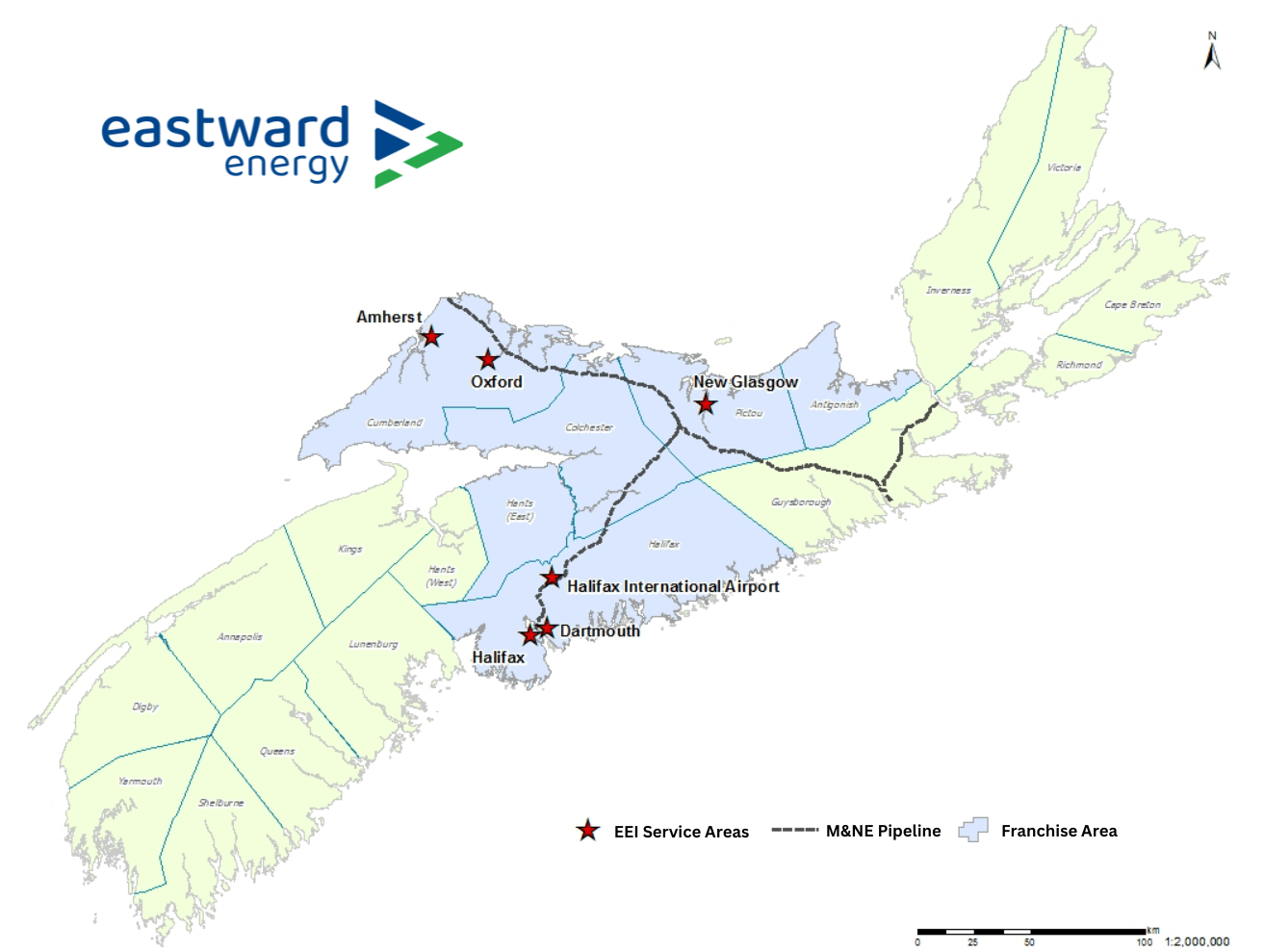
Nova Scotia has pipeline infrastructure and a distribution network in place to deliver natural gas to customers. Industries, apartments, schools, hospitals, and homes use natural gas for energy. Nova Scotia Power also uses natural gas to generate electricity.
Enough research has been conducted to demonstrate that onshore natural gas production could yield impressive results. The program will undertake research to update information in four key areas:
1.
What’s underground
How much natural gas do we have, and can it be extracted safely and economically?
2.
Environmental risks
How could development affect water, ecosystems, and air quality?
3.
Community health
What could development mean for people’s health and well-being?
4.
Infrastructure
Do we have the roads, services, and regulations needed to manage this type of activity?
Nova Scotia has looked at these questions before, but the main studies are either limited or out of date.
The Onshore Petroleum Atlas
(2013–2017)
This was the first major effort to map where natural gas exists. The current research program builds on this foundational work by applying modern tools and analytical methods.
The Wheeler Report (2014)
This report examined environmental and health risks, especially related to hydraulic fracturing, but it was written when the science and technology were still developing.
In the past decade, the environmental and health evidence has evolved substantially:
- Methane (the main component in Natural Gas) emissions are now recognized as a major factor in climate change and air quality decisions.
- Earthquake risks (induced seismicity) are better understood and can now be actively monitored and managed.
- Modern regulations and technologies have advanced in places like British Columbia, offering updated examples of how development can be governed.
Geological, Environmental, and Community Research Projects
Under this Program research projects will be completed to better understand the potential and risks of shale-based natural gas exploration and production in the province. Research design will:
- Measure conditions before anything happens: We need to understand what things look like today – for water, air, and seismic activity – so any future changes can be properly identified.
- Focus on local conditions: The Alberta or British Columbia experiences are significant, but research must also consider our local geology, ecosystems, and communities.
- Include health and community impacts from the start: Questions about people’s health and well-being should be treated as core considerations, not secondary concerns.
Research Projects
All research projects are being carried out by experts in the field, primarily at Dalhousie University but also drawing in other experts from Nova Scotia universities, and in some cases private contractors that bring specific skills and experience.
The following research projects are being undertaken running in parallel with industry exploratory activities.
Geological Studies and Exploratory Drilling Analysis
A primary study will analyze and integrate new drilling data into our provincial knowledge base as it becomes available. This work will help produce clearer understanding of subsurface layers, faults, and zones. It may also review and incorporate older source of information that can be re-assessed with modern perspectives, like existing geological datasets and rock core samples to assess source-rock quality, maturity, mineralogy, brittleness, and geomechanical properties.
A second study will assess potential subsurface risks and identify where more research, monitoring or safeguards may be needed to support future evidence-based decisions. The work will conduct legacy well and geological reviews using provincial databases and other available information, and will synthesize information from SERDIP research teams, including geology, groundwater, methane monitoring, and microseismic data.
Technology Advancements in Reservoir Stimulation
Analysis of technological and regulatory progress in Canada and elsewhere.
This project will review how drilling and hydraulic fracturing technologies have changed over the past two decades and evaluate if these modern practices can be applied in Nova Scotia.
It will review and summarize how well design, drilling, water management, hydraulic fracturing technologies, well integrity, monitoring, emissions controls, and surface operations have changed over the past two decades, including limitations and unresolved risks. The work will compare current international practices with Canadian experience, especially Western Canada and British Columbia, where operational and regulatory approaches may offer useful lessons.
Water Monitoring & Protection: Groundwater and Wastewater Studies
This project monitors current groundwater and surface water conditions before any activity is undertaken. It also studies how wastewater from drilling can best be managed using examples from other jurisdictions.
Groundwater and wastewater researchers will collaborate on a comprehensive program to protect Nova Scotia’s water resources. The program would establish strong baseline data on surface and groundwater quality and quantity and dissolved gases in key basins. This baseline research will include analysis of historical water quality data, as well as collection of new water samples from private wells and municipal infrastructure.
The studies will expand monitoring during any authorized drilling to quickly detect any changes linked to exploration activities. By combining baseline science, ongoing monitoring, and proactive planning for wastewater management, the program helps assess how communities, ecosystems, and drinking water supplies could be protected under possible future scenarios.
Community Health Impact Studies
This research will tell us what potential community health concerns may relate to onshore natural gas development and help provide communities with trustworthy, understandable health information to make informed decisions.
This project will review health findings from existing oil and gas production regions, including respiratory, cardiovascular, reproductive, mental health, and other outcomes, and examine how risks can vary by demographics and social vulnerability. This project will carry out a desk-based health equity assessment for potentially affected rural areas to identify baseline health conditions, vulnerable populations, primary care access issues, and future information needs.
The results will guide what health studies, monitoring, communication tools, and community supports could be needed in the future.
Transportation & Infrastructure Studies
This research will tell us whether communities are prepared for increased activity and what infrastructure upgrades may be required.
This project will focus on understanding how people and goods move in regions where potential onshore energy activity may be considered, and what infrastructure constraints or upgrades could arise under hypothetical development scenarios. Using expertise in travel behaviour modelling, GIS analysis, and transportation simulation, the team would assess current road capacity, traffic patterns, emergency-response access, and the condition of rural transportation networks.
The research would also examine how increased industrial activity – such as heavy-vehicle trips, equipment movement, or workforce commuting – might affect safety, congestion, and community wellbeing.
Seismic (Earthquake) Analysis
This research will tell us what seismic activity occurs naturally in Nova Scotia and helps ensure any future activity can be monitored responsibly and understood in context.
The project will study Nova Scotia’s past and present earthquake activity to create a solid baseline before any future onshore natural gas exploration is undertaken. Using modern seismology tools, including the installation of 50 temporary sensors in key basins, the research will identify how often small earthquakes occur naturally, where they happen, and what faults may be active.
By understanding the region’s natural seismic behavior in advance, the province and communities gain the information needed to distinguish natural events from industry-related ones, assess risks, design protective rules, and support transparent monitoring and responsible management of seismic risks under any future scenario.
Methane Emissions Studies
This research will tell us more about methane emissions in the province and how emissions from any future activity could be effectively monitored and managed.
The work would establish the first reliable baseline of natural methane across key regions, using mobile labs, isotopic sampling (chemical tracking), and drones to distinguish natural methane from any future industrial emissions. It would also conduct real-time, independent emissions monitoring if exploratory drilling were authorized, to show exactly what methane levels look like in Nova Scotia’s complex, forested landscapes and test how accurately emissions can be detected and quantified.
A regulatory scan will compare methane rules and outcomes across Canada and emerging international standards, helping Nova Scotia understand what effective, modern oversight requires.
Geoenvironmental Risk & Knowledge Gaps
This project will conduct a broad survey of the program research to identify remaining gaps in knowledge.
This is the type of multi-faceted foundational research that helped facilitate the growth of the natural gas industry in British Columbia over the past two decades. It will help Nova Scotians make informed decisions about next steps.
This research is needed to understand the limitations of the program work, and to guide future research.
Reporting and Timelines
All studies will report primary conclusions to the Province by the end of 2026. Detailed reports will be completed by the end of Q1 2027.
The province will evaluate the information and will be responsible for its dissemination.